
Online Tutoring
Preply Physics Tutors: Finding the Right Match for Your Goals
A practical guide to choosing physics tutors on Preply for high school, college, and exam prep.
Physics tends to be the subject where students hit a wall. The concepts are abstract, the math gets heavy fast, and classroom pacing rarely matches individual learning speed. That gap is exactly why many people turn to one-on-one tutoring, and Preply has positioned itself as one of the larger marketplaces for finding physics help online. The platform hosts hundreds of tutors who teach physics at various levels, from middle school mechanics to graduate-level quantum mechanics. But volume alone doesn't guarantee a good fit. This guide walks through how the platform works for physics specifically, what to look for in a tutor profile, how pricing shakes out, and where the experience falls short.
Contents
- 1. How Preply Works for Physics Students
- 2. Types of Physics Tutors on the Platform
- 3. Filtering and Search Tools That Matter
- 4. Pricing Structure and What Drives Cost
- 5. Trial Lessons: What to Test and Ask
- 6. Specialized Physics Topics and Coverage Gaps
- 7. Evaluating Tutor Qualifications Beyond the Profile
- 8. Scheduling, Time Zones, and Consistency
- 9. Progress Tracking and Learning Tools
- 10. Mobile App vs Desktop Experience
- 11. Common Challenges and Practical Workarounds
- 12. Comparing Preply to Alternatives for Physics
- 13. Final Assessment of Preply Physics Tutors
Most students arrive at Preply with a concrete problem: an upcoming AP Physics exam, a university mechanics course they're failing, or a need to brush up on electromagnetism for the MCAT. Others want ongoing support throughout a semester. The platform accommodates both patterns, but the tools for finding the right person work differently depending on which camp you're in. Understanding those tools before you start clicking profiles saves hours of trial and error.
The marketplace model means Preply doesn't employ tutors directly. They provide the video classroom, scheduling system, payment processing, and review infrastructure. Tutors set their own rates, write their own bios, and decide which topics they'll teach. That decentralization creates variety but also inconsistency. Two tutors charging the same hourly rate might have wildly different qualifications, teaching styles, and availability. The burden of vetting falls on you, though the platform gives you several filters to narrow the field.
How Preply Works for Physics Students
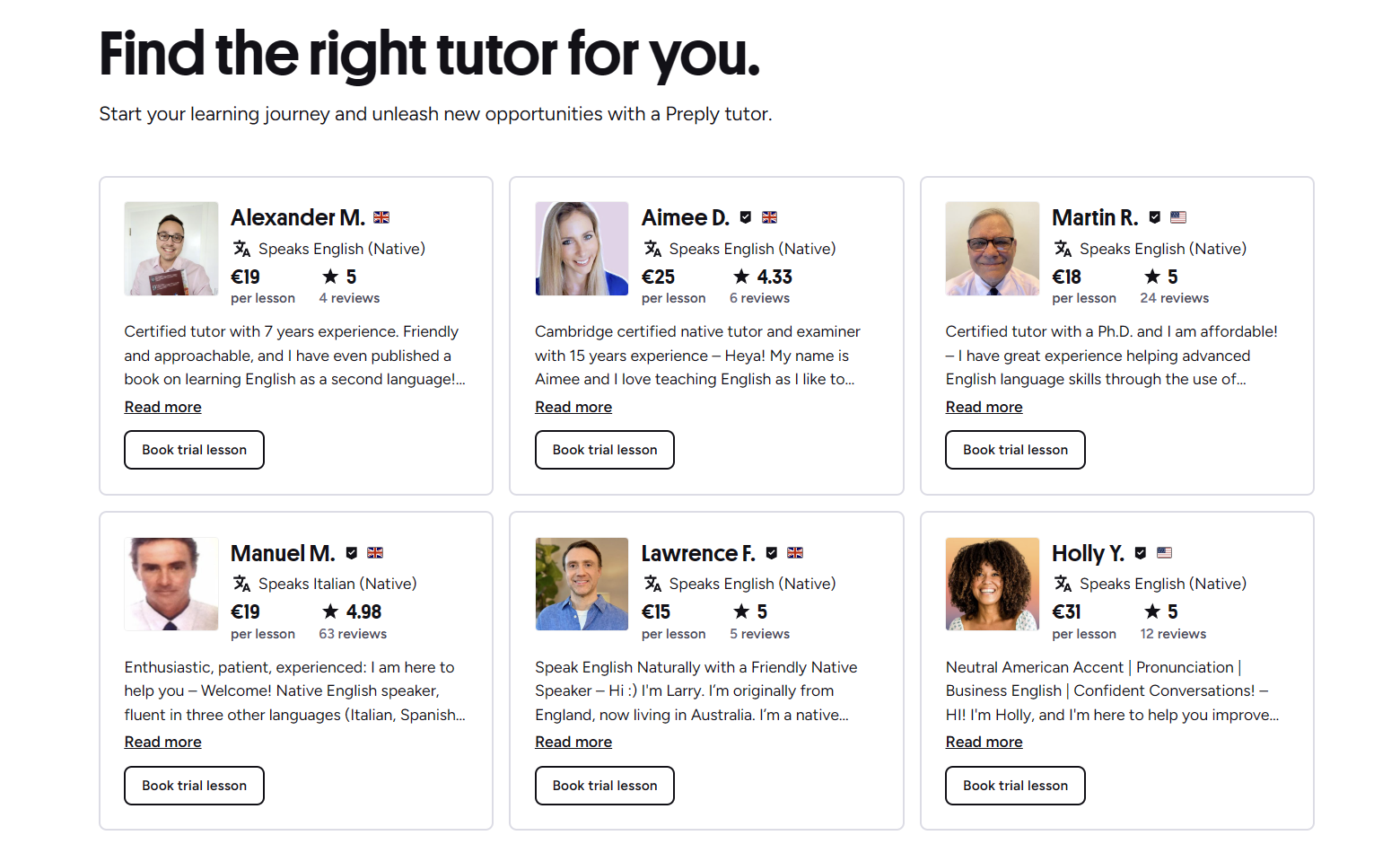
The search flow starts with a subject filter. Selecting "Physics" surfaces tutors who have tagged their profiles with that subject. You can then layer on additional filters: price range, availability windows, tutor's native language, and whether they teach specific subtopics like thermodynamics or relativity. The results page shows each tutor's hourly rate, total lesson count, average rating, and a short tagline. Clicking through reveals a full profile with video introduction, education background, teaching experience, student reviews, and a calendar for booking trial lessons.
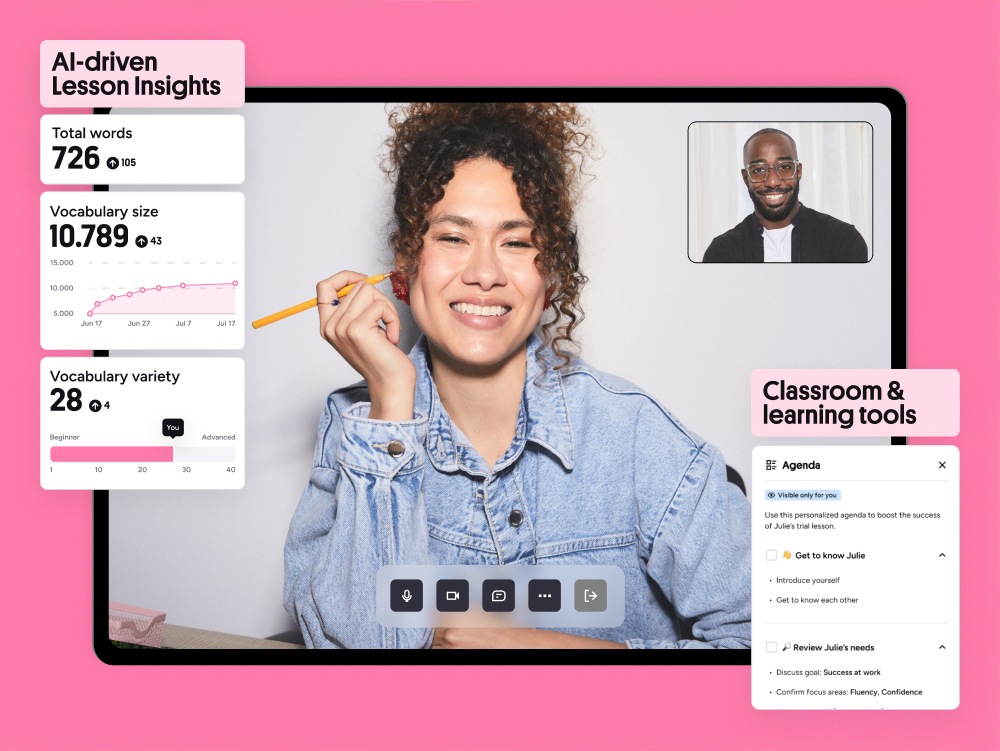
Trial lessons run 25 or 50 minutes and are discounted compared to regular rates — typically 50% off the tutor's standard price. This is the single most useful feature for physics students. A profile can list "quantum mechanics" as a specialty, but a 25-minute conversation reveals whether that tutor can actually explain wave functions in a way that clicks for you. The trial also lets you test the video classroom: screen sharing, virtual whiteboard, file upload, and chat. Physics lessons live or die by the whiteboard. If a tutor's handwriting is illegible on a tablet or they struggle to draw diagrams in real time, the session becomes frustrating fast.
After a trial, you decide whether to book a package. Preply sells lessons in bundles: 5, 10, 15, or 20 hours. Buying more hours upfront lowers the per-lesson cost slightly, but you're locked into that tutor. If the match doesn't work out, you can request a refund for unused hours within a window, though the process involves support tickets and isn't instant. Some tutors offer a "subscription" model instead — a recurring weekly slot at a fixed monthly price. That works well for semester-long support but requires commitment.
Types of Physics Tutors on the Platform
Physics tutors on Preply cluster into a few recognizable categories. University professors and PhD candidates dominate the higher price tiers ($40-80/hour). They bring deep subject knowledge and often teach advanced topics — statistical mechanics, quantum field theory, general relativity. Their schedules can be erratic around academic calendars. Many have taught large lecture sections but less one-on-one experience. That shows up in how they pace explanations.
High school teachers and former teachers form another large group ($25-50/hour). They know standard curricula — AP Physics 1/2/C, IB Physics, A-Levels, GCSE — inside out. They're practiced at breaking down concepts for teenagers and spotting common misconceptions. Their availability often aligns with after-school hours and weekends. For exam prep, this group is frequently the most efficient choice.
Engineering graduates and working engineers ($20-45/hour) bring applied physics perspective. They excel at connecting theory to real-world problems — circuit analysis, fluid dynamics, materials science. Some struggle with pure theory questions that don't map to engineering applications. If your goal is passing a physics-for-engineers course, they're ideal. If you're a physics major wrestling with Lagrangian mechanics, they may not have seen that material since undergrad.
Graduate students and recent grads ($15-35/hour) offer the most schedule flexibility and often the most current familiarity with coursework. They remember the pain points of specific textbooks and problem sets. The trade-off is less teaching polish. Some are natural explainers; others default to reading from slides. Reviews help distinguish them, but the sample size for newer tutors is small.
Scroll horizontally to see all columns
| Tutor Type | Typical Rate | Best For | Watch For |
|---|---|---|---|
| University Professors / PhDs | $40-80/hr | Advanced topics, research prep | Limited availability, academic pacing |
| High School Teachers | $25-50/hr | AP, IB, A-Level, standardized tests | May not cover graduate material |
| Engineers | $20-45/hr | Applied physics, engineering courses | Gaps in pure theory |
| Grad Students / Recent Grads | $15-35/hr | Current coursework, flexible scheduling | Variable teaching experience |
Filtering and Search Tools That Matter
The subject filter is just the starting point. The price slider helps, but physics tutors cluster in predictable bands. Setting a max of $30/hour excludes most professors but keeps many qualified teachers and engineers. The availability filter is more powerful than it looks. Physics students often need evening or weekend slots. Filtering for "available weekends" or "available after 6 PM" cuts the list dramatically and surfaces tutors who actually work with your schedule.
The "specialization" tags on profiles are hit or miss. Tutors self-tag, and there's no verification. A tutor might tag "quantum mechanics" because they took one course five years ago. The reliable signal is in the reviews. Look for reviews that mention the specific topic you need. "Helped me with Lagrangian mechanics for my classical mechanics final" carries more weight than "great physics tutor." The review search box lets you scan for keywords across all reviews for that tutor.
Language filters matter more for physics than for conversational subjects. Technical vocabulary doesn't translate loosely. If you're learning in English but your tutor's first language is Russian, they might know the physics perfectly but struggle with the specific terminology your textbook uses. That friction adds up over a semester. The "native speaker" filter helps, but plenty of non-native tutors teach physics fluently in English. Watch their introduction video — it's the quickest test.
The best filter isn't price or rating. It's whether the tutor has recent reviews for the exact topic you're studying.
Pricing Structure and What Drives Cost
Preply takes a commission from each lesson — 18% to 33% depending on the tutor's total hours taught on the platform. New tutors pay the highest commission, which incentivizes them to raise rates or leave. Established tutors with hundreds of hours pay the lowest rate. This structure means a $30/hour tutor might net $20 or $25 depending on tenure. Students don't see the split, but it explains why some tutors with similar credentials charge different rates.
Package discounts range from roughly 3% to 10% off the single-lesson price. A 20-hour package at $30/hour might cost $540 instead of $600. The savings are real but modest. The bigger financial decision is lesson length. Most tutors offer 50-minute sessions (listed as "1 hour") and some offer 25-minute sessions. For physics, 25 minutes is rarely enough to work through a problem set. Budget for 50-minute minimums.
Currency matters. Preply displays prices in your local currency but tutors set rates in USD. Exchange rate fluctuations can shift your effective cost by 5-10% over a semester. The platform doesn't hedge this. If you're paying in euros, pounds, or rupees, the dollar-denominated rate moves with the market. Some tutors offer "local pricing" for students in specific countries, but it's not systematic.
Scroll horizontally to see all columns
| Tutor Location | Entry Rate | Experienced Rate | Top Tier |
|---|---|---|---|
| North America / Western Europe | $25-35/hr | $40-60/hr | $65-100/hr |
| Eastern Europe | $15-25/hr | $30-45/hr | $50-70/hr |
| South Asia | $10-20/hr | $20-35/hr | $40-55/hr |
| Latin America | $12-22/hr | $25-40/hr | $45-60/hr |
Trial Lessons: What to Test and Ask
The trial lesson is your only low-stakes chance to evaluate a tutor before committing. Treat it like a job interview where you're the hiring manager. Come with a specific problem — not "I need help with physics" but "I'm stuck on this rotational dynamics problem from Chapter 10 of Halliday & Resnick." Share your screen or upload the problem beforehand if the tutor allows it. Watch how they respond. Do they ask what you've tried? Do they identify the conceptual gap? Do they draw a diagram before writing equations?
Ask about their workflow between sessions. Some tutors assign practice problems, review submitted work before the next lesson, or share annotated notes. Others only teach during the live session. For physics, the between-session support often determines whether you actually improve. A tutor who reviews your attempted problems and comes prepared with targeted explanations saves you from reinforcing mistakes.
Test the whiteboard. Ask the tutor to derive a formula or sketch a field diagram. If they're using a mouse instead of a tablet, the drawing will be painful to watch. Many tutors now use iPads or graphics tablets — ask directly. Also check latency. If you're in California and the tutor is in Ukraine, a 200ms delay makes real-time collaboration awkward. The trial reveals this instantly.
After the trial, rate the tutor honestly. The review system helps other students, but it also signals to the tutor. A 4-star review with specific feedback ("great at electromagnetism, but rushed through the last problem") is more useful than a generic 5-star. Tutors read these and adjust. Some will message you after a less-than-perfect rating to ask what they could improve — that's a good sign.
Specialized Physics Topics and Coverage Gaps
Preply's physics coverage is broad but uneven. High school and introductory college topics — kinematics, forces, energy, momentum, circuits, waves, basic thermodynamics — have dozens of tutors. AP Physics 1, 2, and C are well represented. IB Physics (both SL and HL) has specialists who know the internal assessment requirements. A-Level and GCSE tutors are plentiful, especially from the UK.
Upper-division undergraduate topics thin out. Classical mechanics (Lagrangian/Hamiltonian), electromagnetism (Griffiths-level), quantum mechanics (Griffiths or Shankar), statistical mechanics, and solid state physics have tutors, but fewer. You'll often find 3-5 qualified people for these instead of 30. Graduate-level topics — quantum field theory, general relativity, particle physics, condensed matter — might have one or two tutors globally. Their rates reflect scarcity.
Computational physics is a notable gap. If you need help with Python for physics simulations, numerical methods, or data analysis for lab courses, the physics tutors often don't code. The programming tutors don't know the physics. You may need two separate tutors or a rare hybrid. Search "computational physics" or "physics programming" as keywords, but expect slim results.
- Well-covered: AP Physics, IB Physics, A-Level, introductory mechanics, E&M, waves, thermodynamics
- Moderately covered: Upper-division classical mechanics, quantum mechanics, statistical mechanics, relativity
- Thinly covered: Graduate QFT, GR, particle physics, condensed matter, computational physics
- Niche: Physics Olympiad prep, specific textbook walkthroughs (Kleppner, Purcell, Jackson, Sakurai)
Evaluating Tutor Qualifications Beyond the Profile
Profile credentials — degrees, universities, certifications — are self-reported. Preply verifies identity (government ID) but not academic credentials. A tutor claiming a PhD from MIT might have one, or might have taken a single online course. The platform doesn't audit transcripts. This is true of every tutoring marketplace, not just Preply. The workaround is cross-referencing. Search the tutor's name with their claimed university. Check LinkedIn, ResearchGate, or Google Scholar. Many academic tutors have publication records or faculty pages.
Teaching experience is harder to verify. "10 years teaching physics" could mean 10 years as a TA, 10 years of private tutoring, or 10 years of explaining physics to their cat. Look for specificity: "Taught AP Physics C at Lincoln High School 2015-2023" is verifiable. "Helped 50+ students pass JEE Advanced" is a claim you can't easily check but suggests a pattern. Reviews that mention specific outcomes ("raised my grade from C to A in 6 weeks") are stronger signals than "very knowledgeable."
The video introduction is underused by students. Watch it at 1.5x speed if needed. You're evaluating communication clarity, not production value. Does the tutor explain their approach? Do they mention specific physics topics? A generic "I love teaching and helping students succeed" video tells you nothing. A tutor who says "I specialize in helping engineering students master Griffiths electrodynamics, particularly boundary value problems and multipole expansions" has signaled both competence and niche focus.
A tutor who can't explain their teaching philosophy in 60 seconds probably doesn't have one.
Scheduling, Time Zones, and Consistency
Preply's scheduling system shows tutor availability in your local time zone. You book a slot, the tutor confirms, and the lesson appears on both calendars. Recurring weekly slots can be set up after the first lesson. The system sends reminders 24 hours and 1 hour before each session. Cancellations require 4 hours' notice for a full refund; less than 4 hours and the tutor keeps the payment. This policy is stricter than some competitors and catches students off guard during exam crunch weeks when schedules shift daily.
Time zone mismatches are the silent killer of long-term tutoring relationships. A tutor in Warsaw (CET) available 7-10 PM their time is 1-4 PM EST — workable for US East Coast evenings but impossible for West Coast. A tutor in Manila (PST) available 8-11 PM their time is 5-8 AM PST — brutal for US students. The availability filter helps, but always confirm the tutor's actual time zone in the first message. Some tutors list availability in their local time but the platform converts it; others manually set slots in target time zones. The conversion isn't always perfect.
Consistency matters more than intensity for physics. One 90-minute session before an exam helps less than six 50-minute sessions spread across the weeks leading up. The platform encourages packages, which nudges toward consistency. But if your tutor travels, has exams, or picks up a new job, their availability can vanish mid-semester. Ask during the trial: "What does your schedule look like for the next 3 months? Any planned gaps?" A tutor who hedges or says "I'll let you know" is signaling instability.
Progress Tracking and Learning Tools
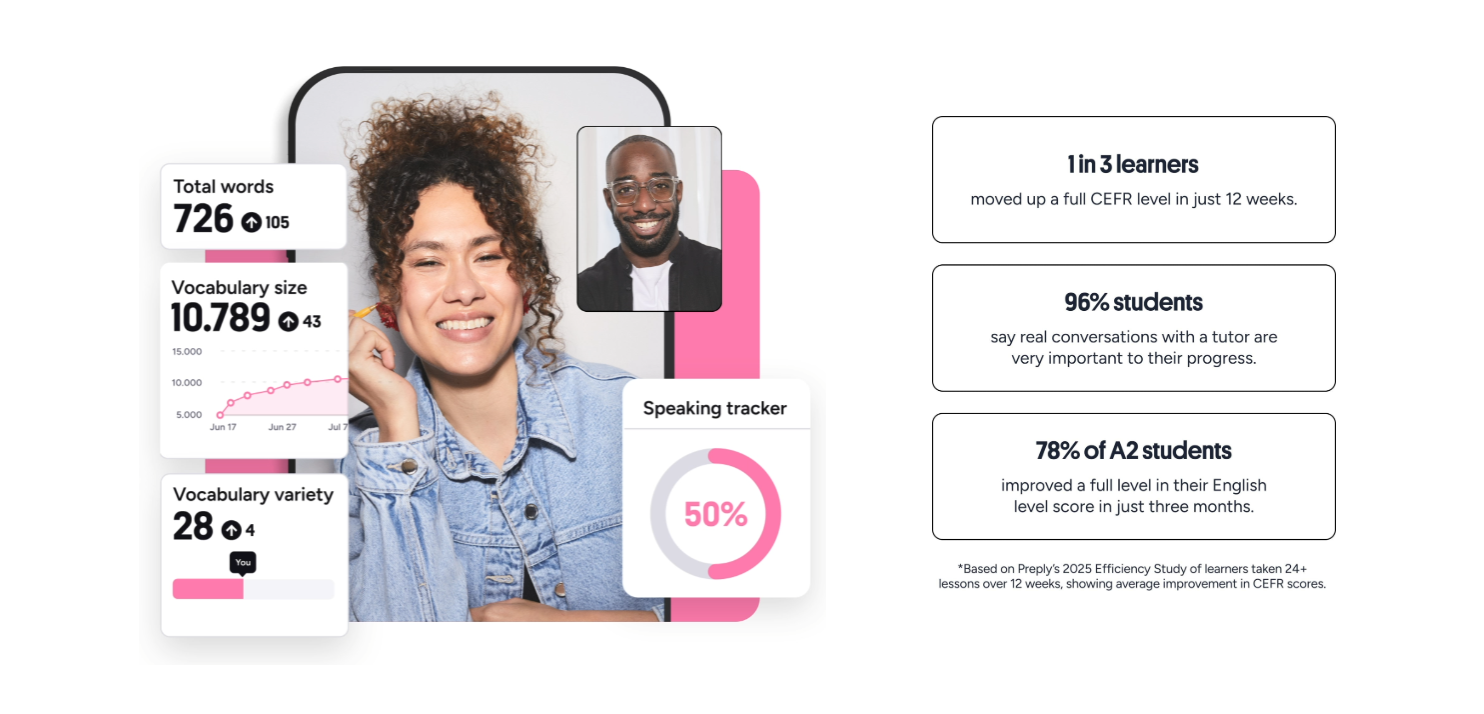
Preply's built-in progress tracking is basic. After each lesson, tutors can leave notes visible to the student: topics covered, homework assigned, areas to review. Students can also leave private notes. There's no structured curriculum tracker, no concept mastery map, no spaced repetition system. For physics, where concepts build cumulatively (you need vectors for forces, forces for energy, energy for thermodynamics), this lack of structure means the student or tutor must maintain the roadmap externally.
The platform does track lesson count, total hours, and a "learning plan" field where tutors can outline goals. Some tutors use this well — breaking a semester into weekly targets with specific textbook sections. Others leave it blank. The mobile app shows a simple dashboard: upcoming lessons, past lessons, tutor messages, and a progress bar based on the learning plan. It's functional but not insightful. Don't expect analytics like "you've mastered 73% of AP Physics 1 topics."
Serious physics students typically build their own tracking: a shared Google Doc or Notion page with problem sets, solutions, concept summaries, and a running list of "things to ask next time." The best tutors adopt this habit and contribute to it. If a tutor resists shared documentation ("I keep my own notes"), that's a minor negative signal. Physics problem-solving generates artifacts — diagrams, derivations, numerical solutions — that benefit from persistent storage.
Mobile App vs Desktop Experience
Preply's mobile app (iOS and Android) handles scheduling, messaging, and video lessons. The video classroom on mobile is functional but cramped for physics. The whiteboard works with touch or stylus, but drawing precise diagrams on a phone screen is frustrating. Tablets are better. If you plan to take lessons on an iPad with Apple Pencil, the experience is close to desktop. On a phone, you're limited to watching the tutor's screen and talking — not ideal for working through problems together.
The desktop browser version (Chrome, Firefox, Safari) offers the full whiteboard toolkit: shapes, text boxes, equation editor, image upload, multi-page boards. The equation editor supports LaTeX-style input, which matters for physics. You can type \frac{1}{2}mv^2 and get rendered notation. The mobile app has a simplified equation toolbar but no LaTeX input. For anything beyond algebra-based physics, desktop is strongly preferred.
Screen sharing works on both platforms but requires browser permissions on desktop and a system-level broadcast on mobile. Some tutors share their screen to show simulations (PhET, Wolfram, custom Python notebooks). This works well on desktop; on mobile the shared screen is tiny. If your tutor uses simulations heavily, plan for desktop sessions.
Common Challenges and Practical Workarounds
The most frequent complaint from physics students on Preply isn't tutor quality — it's tutor turnover. A tutor you click with in September might leave the platform in January. Preply doesn't guarantee tutor retention. When a tutor deactivates, your package hours transfer to credit, but you lose the relationship and the tutor's knowledge of your gaps. Mitigate this by documenting your progress externally (shared notes, problem logs) so a new tutor can ramp up fast.
Another friction point: the platform's messaging system. It's fine for scheduling but poor for technical discussion. You can't render equations in chat, image uploads are compressed, and threads get buried. Most tutor-student pairs migrate to WhatsApp, Telegram, or email for between-session questions. Preply's terms discourage off-platform communication, but in practice everyone does it for physics. Just keep the lesson booking and payment on the platform.
Refund disputes happen. If a tutor no-shows, Preply refunds automatically. If the lesson happens but the tutor was unprepared, taught the wrong topic, or had technical issues, you file a dispute. Resolution takes 3-7 days. The evidence that matters: screenshots of the whiteboard, chat logs, the tutor's own notes. Document during the lesson if something feels off. It feels adversarial, but it's the only leverage you have.
The platform optimizes for transaction volume, not learning outcomes. Your incentives and Preply's incentives align only partially.
Comparing Preply to Alternatives for Physics
Wyzant, Varsity Tutors, Chegg Tutors, and Tutor.com all compete in this space. Wyzant is the closest model — marketplace, tutor-set rates, trial lessons. Wyzant's tutor vetting is slightly more rigorous (background checks, subject assessments), but their physics pool is smaller. Varsity Tutors uses a matching algorithm instead of search; you describe your needs, they assign a tutor. Less control, sometimes better matches, higher prices. Chegg and Tutor.com are on-demand homework help — drop-in, per-minute billing, no consistent tutor. Good for "stuck on this problem right now," bad for learning physics systematically.
University tutoring centers are free but limited hours, often staffed by grad students who prioritize their own research. Private local tutors (found via Craigslist, Nextdoor, university bulletin boards) can be excellent and cheaper ($30-50/hr cash, no platform fee), but you lose the scheduling tools, payment protection, and review system. The trade-off is administrative overhead vs. platform fees.
Scroll horizontally to see all columns
| Platform | Model | Physics Tutor Depth | Typical Rate | Best For |
|---|---|---|---|---|
| Preply | Marketplace | High | $15-80/hr | Ongoing 1-on-1, topic specialists |
| Wyzant | Marketplace | Medium | $30-100/hr | Vetted tutors, US-based preference |
| Varsity Tutors | Managed matching | Medium | $50-120/hr | Hands-off matching, premium support |
| Chegg / Tutor.com | On-demand | Low (generalists) | $0.50-1/min | Quick homework unsticking |
| Local / Independent | Direct | Variable | $25-60/hr | Low cost, in-person option |
Final Assessment of Preply Physics Tutors
Preply works for physics if you treat it as a search tool, not a solution. The platform gives you access to a global pool of tutors, a functional video classroom, and enough structure to keep scheduling and payment friction low. It doesn't guarantee teaching quality, curriculum alignment, or tutor continuity. Those remain your responsibility. Students who succeed on Preply approach it like hiring: they define their needs, interview multiple candidates, test with trials, and maintain their own learning records. Students who expect the platform to deliver a curated, managed experience end up frustrated.
The sweet spot is high school and introductory college physics with a side of exam prep. For AP, IB, A-Level, and first-year university courses, the tutor density is high enough that you can be selective. For advanced undergraduate and graduate topics, the pool shrinks to a handful of specialists — still usable, but you'll pay more and schedule around their academic calendars. Computational physics and niche subfields are barely served.
If you're a self-directed learner who knows what topics you need and can evaluate whether a tutor explains them clearly, Preply is a solid option. If you need someone to diagnose your gaps, design a curriculum, and hold you accountable, you're asking for a service the platform doesn't provide. In that case, a managed tutoring service or a local tutor with a structured program might serve you better, even at higher cost.
Frequently Asked Questions
How much do Preply physics tutors typically charge?
Rates range from $10/hour for graduate students in lower-cost regions to $100/hour for professors with specialized expertise. Most qualified tutors for high school and introductory college physics charge $20-50/hour.
Can I find tutors for specific physics textbooks like Halliday & Resnick or Griffiths?
Yes. Many tutors list the textbooks they teach from in their profiles. Search for the textbook name in the tutor search or ask during a trial lesson. Tutors who specialize in AP Physics C or upper-division courses often teach directly from Griffiths, Kleppner, or Purcell.
What happens if my tutor cancels or disappears mid-semester?
Unused package hours are refunded as Preply credit. You'll need to find a new tutor. This is why maintaining your own notes and problem logs is critical — it lets a new tutor pick up where the last one left off.
Are trial lessons really 50% off?
Yes, the first lesson with any tutor is discounted 50% off their standard rate. The discount applies to either a 25-minute or 50-minute trial, depending on what the tutor offers.
Can I get help with physics lab reports and data analysis?
Some tutors offer this, but it's not universal. Look for tutors who mention "lab reports," "data analysis," or "experimental physics" in their profiles. Computational physics support is rare on the platform.
Does Preply verify tutors' physics degrees and teaching credentials?
Preply verifies identity with government ID but does not verify academic credentials or teaching certifications. Always cross-check a tutor's claimed background independently.
Is the mobile app good enough for physics lessons?
For watching and listening, yes. For active problem-solving with diagrams and equations, a desktop or tablet with stylus is strongly recommended. The mobile whiteboard is too cramped for serious physics work.