
Language Learning
Preply German Level Test: What It Measures and How to Use It
A practical guide to the test structure, CEFR alignment, and next steps after your results.
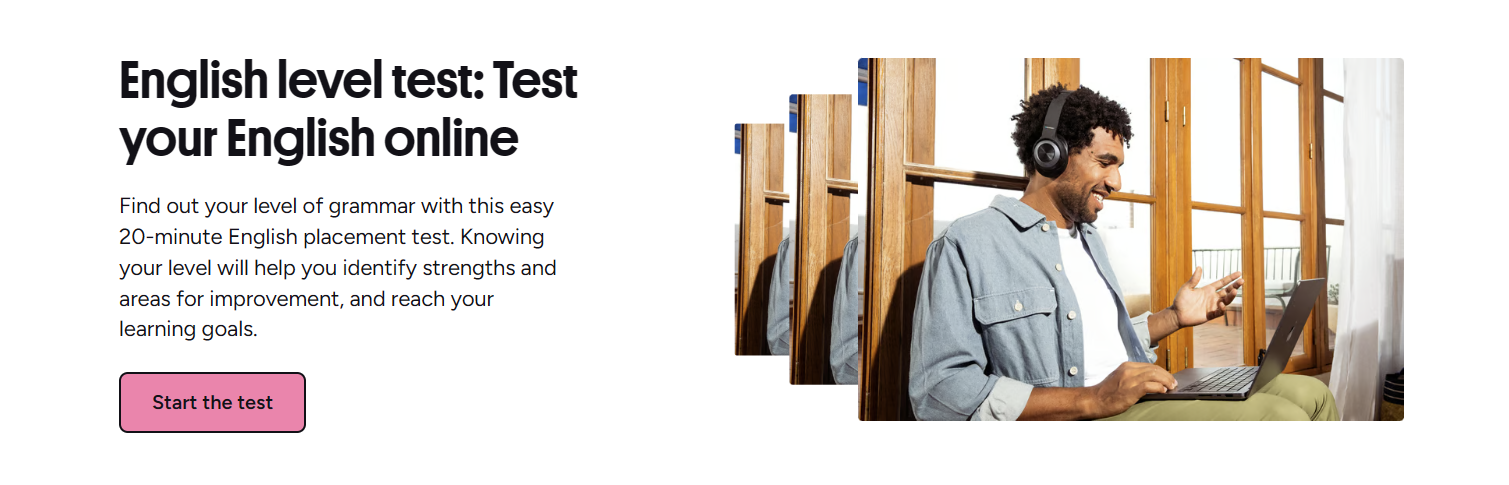
The Preply German level test sits at the entry point for anyone starting lessons on the platform. It's not an exam you pass or fail. Instead, it works as a diagnostic tool that helps the system understand where your German skills stand right now. The results feed directly into tutor recommendations, so you spend less time explaining your background and more time learning.
Contents
- 1. What the Preply German Level Test Actually Does
- 2. Test Format and Question Types
- 3. How the Scoring Maps to CEFR Levels
- 4. Taking the Test: Step by Step
- 5. What Your Results Mean for Tutor Matching
- 6. Common Questions About Test Accuracy
- 7. Retaking the Test and Tracking Progress
- 8. How It Compares to Other German Placement Tests
- 9. Practical Tips Before You Start
- 10. Limitations Worth Knowing
- 11. Using Results With Preply German Courses
- 12. Final Assessment of the Preply German Level Test
Most learners come to Preply with a vague sense of their ability. Maybe you studied German in school years ago. Maybe you've picked up phrases from travel or media. The test turns that vague sense into a concrete CEFR level — A1 through C2 — which then shapes your entire learning path on the platform.
This guide walks through what the test actually measures, how the questions work, what the scores mean, and how to use the results effectively. It also covers common misconceptions, retake policies, and how this placement test compares to other German assessment options.
What the Preply German Level Test Actually Does
The test serves three practical purposes. First, it assigns you a CEFR level. Second, it identifies specific skill gaps — grammar weak spots, vocabulary range, listening comprehension. Third, it feeds the matching algorithm that suggests tutors who specialize in your level and learning goals.
Unlike formal exams such as Goethe-Zertifikat or TestDaF, this test carries no official certification. You cannot use the result for university admission, visa applications, or employment proof. It exists solely to optimize your experience inside the Preply ecosystem.
The test is free and available to anyone with a Preply account. You do not need to book a lesson or enter payment details to take it. This makes it a low-risk way to get a baseline measurement before committing to paid tutoring.
Test Format and Question Types
The test adapts to your responses. It starts with a broad mix of question difficulties, then narrows based on your performance. This adaptive design means two test-takers rarely see identical question sets. The whole process typically takes 15 to 25 minutes.
Question types fall into four categories. Grammar questions test case endings, verb conjugation, word order, and preposition usage. Vocabulary questions assess range through fill-in-the-blank, matching, and multiple-choice formats. Reading comprehension presents short texts — emails, signs, article excerpts — followed by inference and detail questions. Listening comprehension uses short audio clips with native speakers at natural speed.
- Grammar: case system, verb position, adjective endings, subjunctive forms
- Vocabulary: everyday topics, idiomatic expressions, register awareness
- Reading: practical texts (timetables, messages, short articles)
- Listening: dialogues, announcements, brief monologues
Speaking and writing production are not tested directly. The platform relies on receptive skills (reading, listening) and discrete-point grammar/vocabulary items to infer productive ability. This is a limitation worth knowing — some learners test higher than their actual speaking comfort level.
The interface shows a progress indicator but not a question counter, since the total number varies. You cannot skip questions or return to previous ones. Each answer locks in the next question's difficulty tier.
How the Scoring Maps to CEFR Levels
Preply uses the Common European Framework of Reference (CEFR) as its leveling standard. The test output is a single level designation: A1, A2, B1, B2, C1, or C2. Some reports show a borderline indicator (for example, A2/B1) when your score sits near a threshold.
Scroll horizontally to see all columns
| Level | Description | Typical Study Hours |
|---|---|---|
| A1 | Basic phrases, simple interactions | 80-100 |
| A2 | Routine tasks, familiar topics | 180-200 |
| B1 | Standard situations, opinions | 350-400 |
| B2 | Complex texts, fluent interaction | 500-600 |
| C1 | Demanding texts, nuanced expression | 700-800 |
| C2 | Near-native comprehension and production | 1000+ |
The study hours column reflects cumulative guided learning estimates from the Council of Europe. Individual variation is significant. Someone with immersive exposure may reach B2 in fewer formal hours than a classroom-only learner.
Preply does not publish the exact scoring algorithm or raw-to-CEFR conversion tables. The mapping is proprietary. What matters practically: the level you receive determines which tutor profiles appear first in your recommendations and which curriculum materials the platform suggests.
A placement test only needs to be accurate enough to start a productive conversation. Perfect precision is neither possible nor necessary.
Taking the Test: Step by Step
You need a Preply account. If you don't have one, sign up with email, Google, or Apple ID. The test lives under the "Level Test" section in the main navigation or dashboard. Select German from the language dropdown.
- Create or log into your Preply account
- Navigate to Level Test and choose German
- Allow microphone access for listening sections
- Complete all sections in one sitting (no pause/resume)
- Review your CEFR result and skill breakdown
- Browse recommended tutors filtered to your level
Use a desktop or laptop with a stable connection. Mobile works but the listening audio sometimes plays inconsistently on older phones. Headphones help with the listening section, especially in noisy environments. The test does not require a webcam.
You cannot pause the test once started. The adaptive engine expects continuous responses. If you close the browser or lose connection, you'll need to restart from the beginning. Plan for 25 uninterrupted minutes.
What Your Results Mean for Tutor Matching
After the test, your dashboard updates with a level badge and a "Recommended for you" tutor carousel. The algorithm prioritizes tutors who: teach your level regularly, have high ratings from students at that level, and offer lesson types matching common needs for that level (conversation practice for B1+, grammar focus for A1-A2, exam prep for B2+).
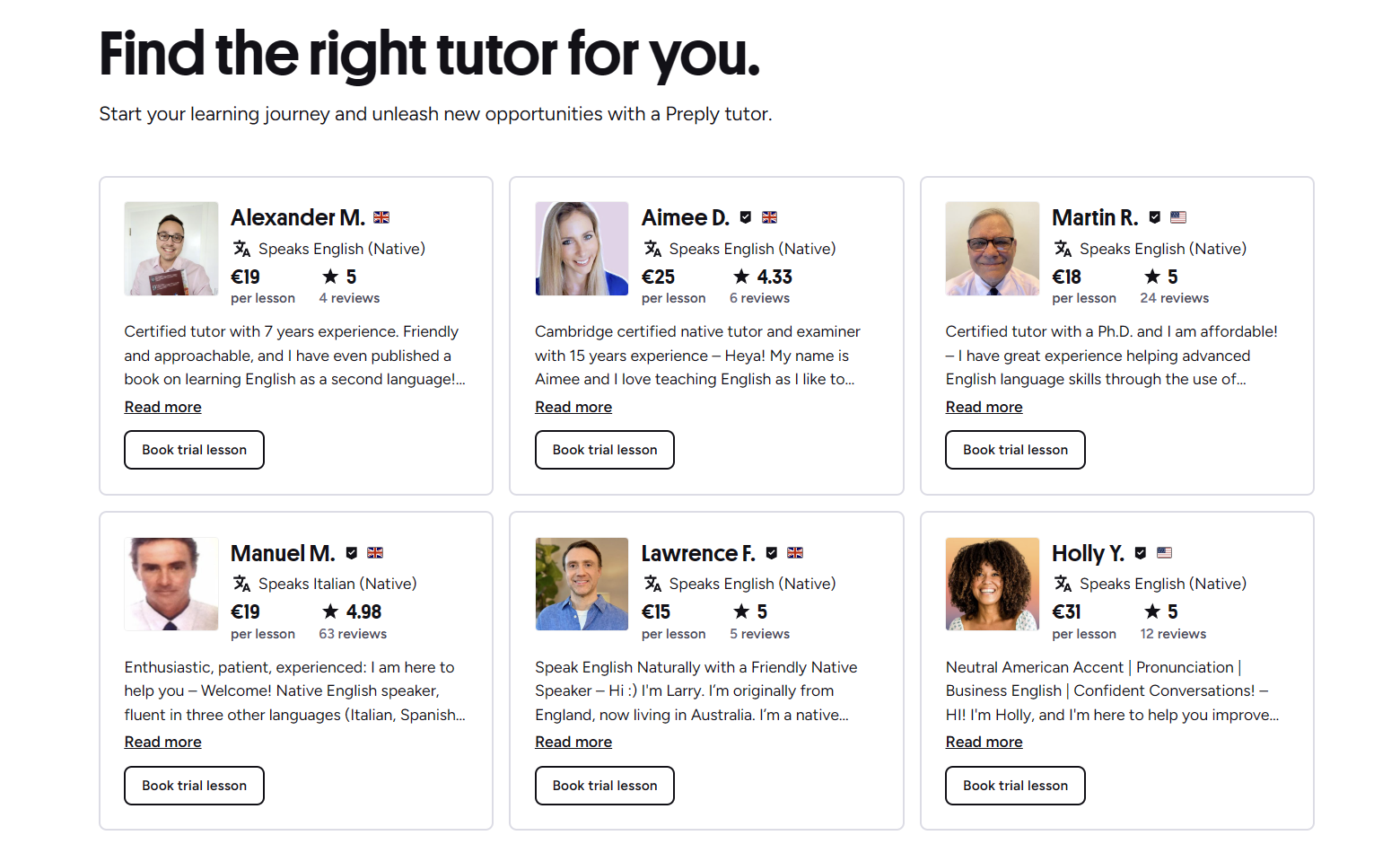
You can override the filter. The level badge is not a restriction — you can book any tutor at any level. But tutors see your tested level on your student profile, which helps them prepare appropriate materials for a trial lesson.
The skill breakdown — grammar, vocabulary, reading, listening — appears as a radar chart. Tutors can view this if you share it. Many use it to design the first few lessons around your weakest areas rather than following a generic curriculum.
Common Questions About Test Accuracy
Accuracy depends on what you're measuring. For receptive skills and discrete grammar knowledge, the test correlates reasonably well with formal CEFR assessments. For speaking fluency, pronunciation, and writing coherence, it's less reliable because those skills aren't directly tested.
False highs happen when a learner has strong passive knowledge (reading, grammar rules) but limited active production. False lows happen when test anxiety or technical issues affect performance, or when a learner's strength lies in communicative strategies the test doesn't capture.
Many tutors run their own informal assessment in the first lesson regardless of the test result. This is normal and useful. The Preply test gets you in the right ballpark; the tutor fine-tunes from there.
Retaking the Test and Tracking Progress
You can retake the test once every 30 days. The platform stores your history, so you can see level changes over time. This is useful for motivation and for tutors adjusting lesson difficulty.
Progress tracking works best when combined with regular lessons. The test alone doesn't measure incremental improvement well — it's too coarse. A learner might study for two months and still test at the same CEFR level while having made real gains in fluency, vocabulary depth, and confidence.
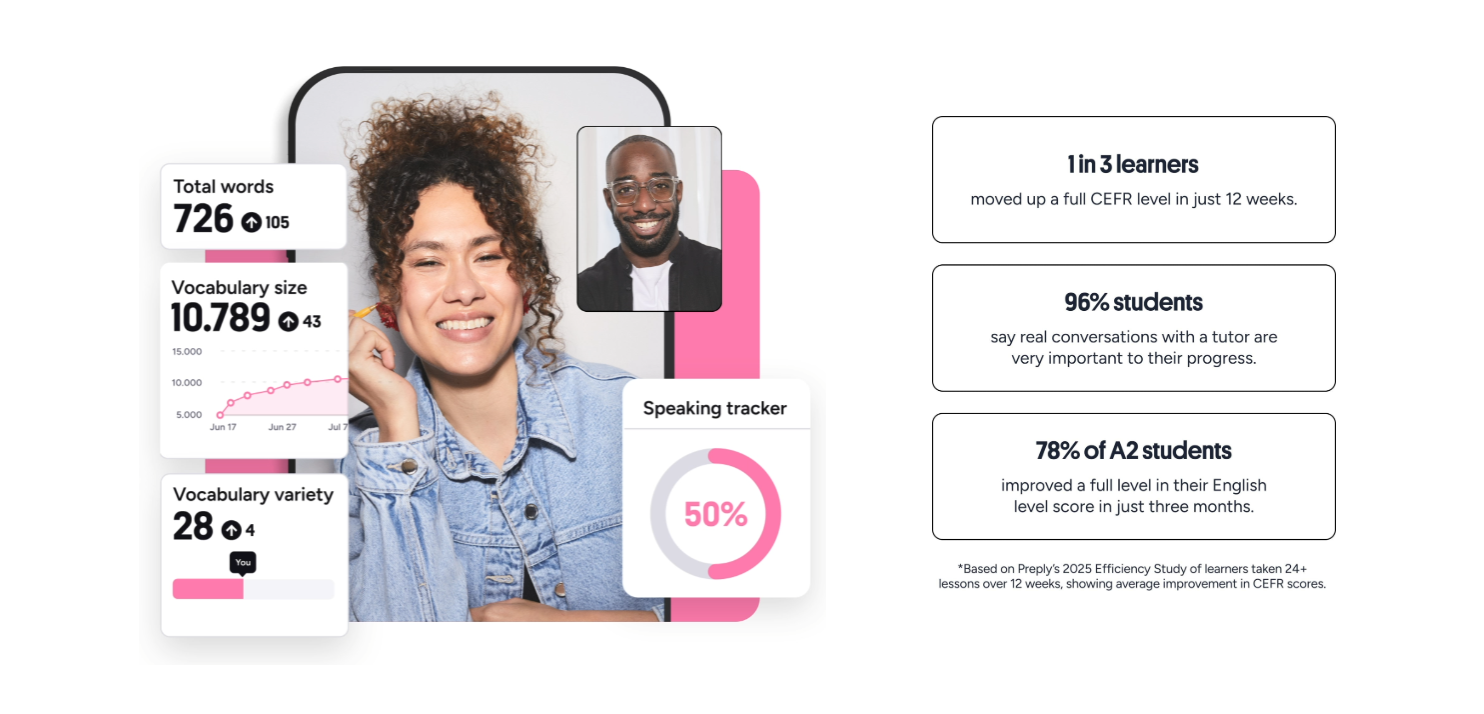
Some learners retake before major milestones — a job interview, a language exam, a trip. Others use it quarterly as a checkpoint. There's no optimal frequency; just don't expect the test to capture week-to-week changes.
How It Compares to Other German Placement Tests
Several free online German placement tests exist. Deutsche Welle, Goethe-Institut, and various language schools offer them. Most follow similar CEFR-aligned formats but differ in length, question types, and adaptive logic.
Scroll horizontally to see all columns
| Test | Duration | Adaptive | Skills Tested | Output |
|---|---|---|---|---|
| Preply | 15-25 min | Yes | Grammar, vocab, reading, listening | CEFR level + tutor matching |
| Deutsche Welle | 30-45 min | No | Grammar, vocab, reading, listening | CEFR level + course recommendation |
| Goethe-Institut | 45-60 min | Partially | All four skills including writing | CEFR level + exam readiness |
| Klett Sprachen | 20-30 min | Yes | Grammar, vocab, reading | CEFR level + textbook placement |
The Goethe test is the most comprehensive because it includes a writing component and optional speaking assessment. Deutsche Welle's test is solid for self-study course placement. Klett's test aligns with their textbook series. Preply's advantage is the immediate tutor connection — you get a level and actionable next steps in one flow.
Every placement test has blind spots. The best one is the one that leads to a good first lesson.
Practical Tips Before You Start
Don't study for the test. Cramming grammar tables the night before inflates your score temporarily and leads to mismatched tutor recommendations. The goal is an honest snapshot of your current ability.
- Take it when you're alert, not after a long work shift
- Use headphones for the listening section
- Don't use dictionaries, translators, or notes
- Guess if unsure — the adaptive engine handles partial knowledge
- Note the time; rushing lowers accuracy more than pausing to think
If you've been learning German recently, take the test soon after a study session when the material is fresh. If you're returning after a long break, consider a light review of basic grammar (cases, verb conjugation) first — not to game the test, but to avoid placing lower than your dormant knowledge warrants.
Limitations Worth Knowing
The test does not assess pronunciation, intonation, or speaking fluency. It cannot detect fossilized errors that only appear in spontaneous speech. It doesn't measure cultural competence, pragmatic awareness, or the ability to manage communication breakdowns — all critical for real-world German use.
The listening section uses standard German (Hochdeutsch). If your goal involves Swiss German, Austrian varieties, or regional dialects, the test won't reflect that readiness. Discuss dialect needs with tutors directly.
Business German, medical German, academic German — specialized registers are not tested. The vocabulary section covers general frequency words. A B2 result means general B2, not "B2 in pharmaceutical regulatory language."
A general placement test cannot replace a needs analysis. The test tells you where you are. A good tutor helps you define where you need to go.
Using Results With Preply German Courses
Preply offers structured German courses alongside 1-on-1 tutoring. Your test level unlocks course recommendations: A1-A2 courses focus on survival communication and basic grammar patterns. B1-B2 courses add complexity — subjunctive, passive, connector words, extended discourse. C1-C2 courses target nuance, register shifting, and specialized vocabulary.
Courses are self-paced with tutor support options. You can combine a course with weekly speaking lessons — the course builds systematic knowledge, the lessons activate it. Many learners at A2-B1 find this combination more effective than either alone.
Final Assessment of the Preply German Level Test
The Preply German level test does what a free placement tool should do: it gives you a reasonable CEFR estimate in under 30 minutes and connects that estimate to a pool of tutors who teach at that level. It's not a substitute for certified exams, and it shouldn't be treated as a definitive measure of your German ability. But as a practical entry point to structured learning on the platform, it works well enough.
The real value emerges when you combine the test result with a tutor's human assessment in the first lesson. The test provides the starting coordinates; the tutor helps you navigate from there. Use the test, book a trial, and adjust based on what the tutor observes. That's the workflow the platform was designed for.
Frequently Asked Questions
Is the Preply German level test free?
Yes, the test is completely free for anyone with a Preply account. No payment information is required.
How long does the test take to complete?
Most people finish in 15 to 25 minutes. The adaptive format means the exact length varies based on your responses.
Can I retake the test if I'm not satisfied with my result?
You can retake once every 30 days. The platform keeps your history so you can track level changes over time.
Does the test result expire?
Results remain visible on your profile but the platform treats them as current for 30 days of inactivity. After that, tutors may ask you to retake.
Can I use this test result for university or visa applications?
No. This is a placement tool for Preply's tutor matching system only. It carries no official certification or recognition.
What if I disagree with my tested level?
Discuss it with your tutor in the first lesson. Most tutors run their own quick assessment and will adjust materials regardless of the test result.
Does the test include speaking or writing sections?
No. The test covers grammar, vocabulary, reading comprehension, and listening comprehension only. Speaking and writing are not directly assessed.