

Language Learning
Preply English for Travel: Learn Practical Phrases for Your Trip
A practical guide to using Preply for travel-focused English learning.
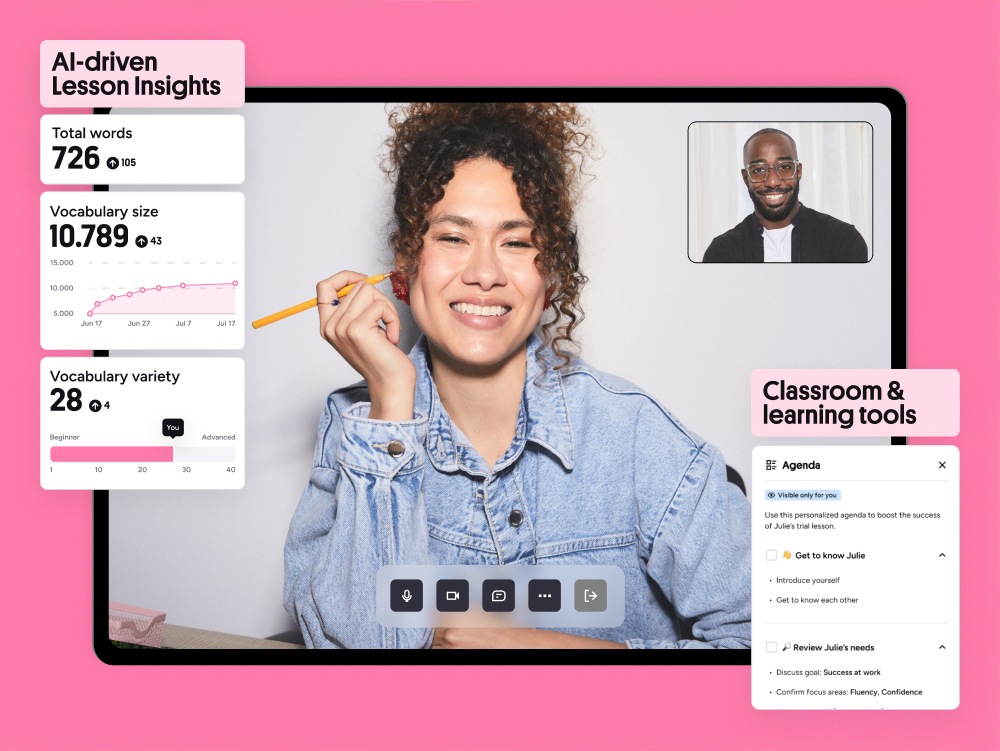
Planning a trip abroad often means preparing for conversations you can't fully predict. Ordering food, asking for directions, handling emergencies, or simply chatting with locals all require a different slice of English than what most textbooks cover. Preply English for Travel targets that gap by connecting learners with tutors who shape lessons around real travel scenarios.
Contents
- 1. Why Travel English Matters
- 2. How Preply Structures Travel English Lessons
- 2.1. Customized Lesson Plans
- 2.2. Focus on Speaking and Listening
- 3. Finding the Right Tutor for Travel English
- 4. Essential Travel English Phrases and Idioms
- 5. Using the Preply App for On-the-Go Practice
- 6. Progress Tracking and Staying Motivated
- 7. Cost and Value Considerations
- 8. Final Assessment of Preply English for Travel
The platform doesn't sell a fixed travel course. Instead, it lets you filter tutors who specialize in travel English, then build a lesson plan together. That flexibility matters because a business traveler heading to Tokyo for a conference needs different language tools than a backpacker crossing South America for three months.
This guide walks through how the service works for travel-focused learners, what to look for in a tutor, which features actually help on the road, and whether the cost aligns with the results you can expect.
Why Travel English Matters
General English courses teach grammar rules, essay structure, and academic vocabulary. Travel English prioritizes survival phrases, polite forms, pronunciation clarity, and cultural norms. The difference shows up quickly when you're standing at a train station in Munich trying to rebook a missed connection.
- Asking for directions and understanding spoken answers
- Handling check-in, security, and boarding at airports
- Ordering food with dietary restrictions or allergies
- Negotiating prices in markets or with taxi drivers
- Describing symptoms at a pharmacy or clinic
- Making small talk with hosts or fellow travelers
Each situation demands vocabulary you won't find in a standard intermediate syllabus. Tutors who know travel English also teach the unspoken rules: when to use "could you" versus "can you," how to soften a complaint so you get help instead of resistance, and which gestures accompany common phrases in different cultures.
How Preply Structures Travel English Lessons
After you select a tutor, the first session usually involves a needs analysis. You describe your destination, trip length, current level, and the situations that worry you most. The tutor then proposes a sequence of topics. Because lessons are one-on-one, the pace adjusts instantly if you master hotel check-in dialogue but struggle with pharmacy vocabulary.
The platform's classroom includes a shared whiteboard, file uploads, and a chat box that saves vocabulary lists. Tutors often upload role-play scripts, audio clips of native speakers in travel settings, or screenshots of real menus and signs. You can revisit those materials between sessions without digging through email attachments.
Customized Lesson Plans
A tutor might design a five-lesson arc: airport survival, accommodation basics, food and dining, transport and directions, and emergency phrases. Each lesson blends speaking practice, listening drills, and quick grammar fixes that arise naturally. Homework often involves recording yourself on the app repeating key phrases, then sending the audio for feedback.
Focus on Speaking and Listening
Reading and writing take a back seat. The goal is automatic recall under pressure. Tutors run timed drills where you respond to a simulated gate announcement or a waiter's rapid question. They also expose you to accent varieties — Indian English, Australian English, Caribbean English — so you're not thrown off when the person answering your question doesn't sound like a textbook narrator.
Scroll horizontally to see all columns
| Area | Travel English | General English |
|---|---|---|
| Vocabulary | Situational phrases, idioms, polite forms | Academic, business, literary words |
| Grammar | Targeted fixes for spoken errors | Comprehensive rule coverage |
| Listening | Fast, accented, noisy environments | Clear, standard, slow audio |
| Speaking | Role-plays, simulations, pronunciation | Presentations, debates, essays |
| Cultural content | Etiquette, gestures, local norms | Broad cultural overviews |
The table highlights why a dedicated travel focus saves time. You're not learning to write a cover letter; you're learning to understand a rapid "Gate changed to B14" announcement over a crackling speaker.
Finding the Right Tutor for Travel English
Preply's filter system lets you tick "English for travel" as a specialty. That narrows the list, but you still need to evaluate profiles. Look for tutors who mention specific destinations they've taught for, or who list experience with tourism, hospitality, or aviation English. Reviews from other travelers are a strong signal.
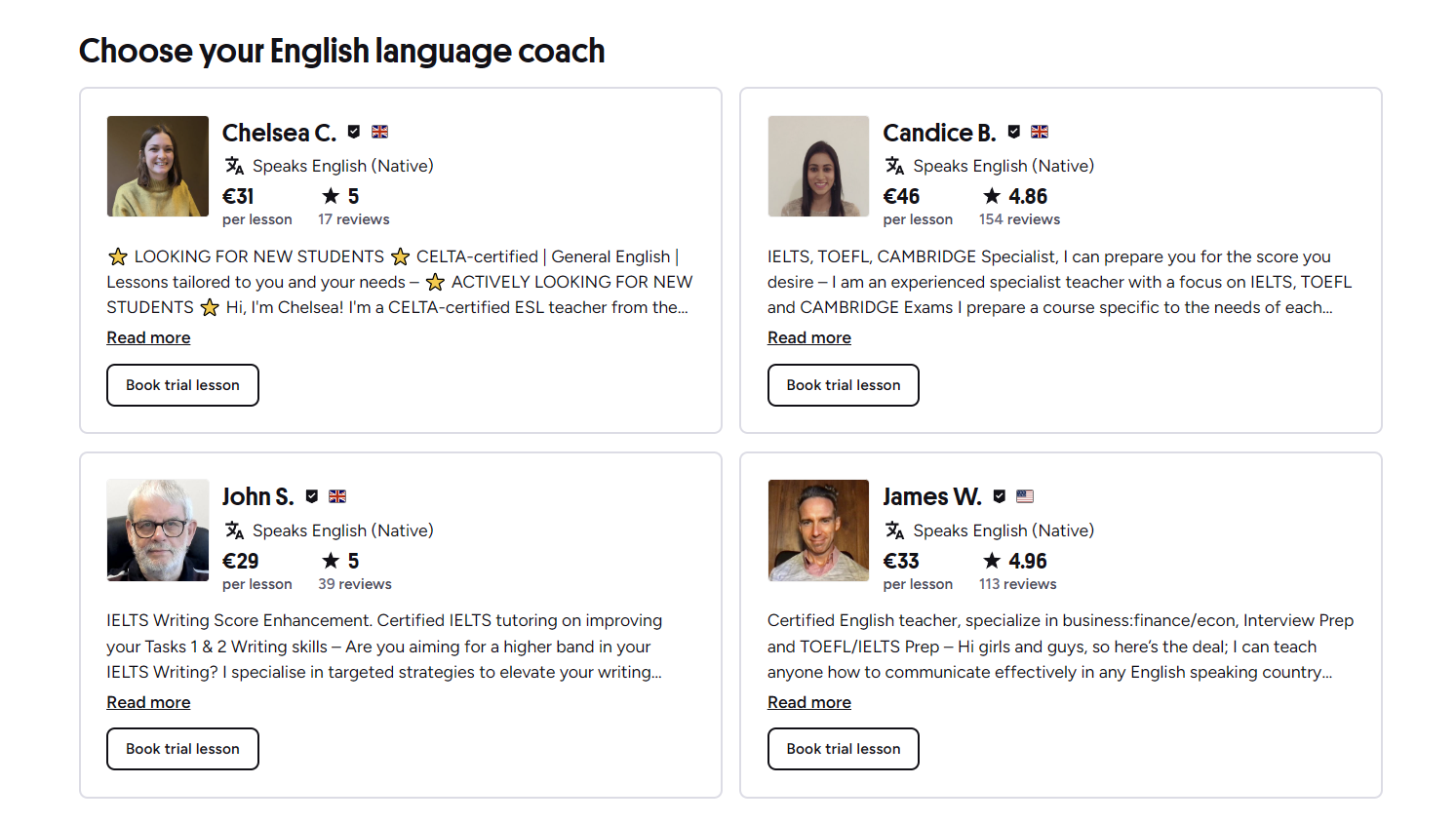
Watch the intro videos. A tutor who speaks clearly at a natural pace and uses gestures to illustrate meaning will likely do the same in lessons. Check their availability against your time zone — early morning or late evening slots can be scarce for popular tutors.
- Specialty tag: English for travel or tourism English
- Reviews mentioning trip preparation or travel confidence
- Intro video demonstrating clear, paced speech
- Availability matching your pre-trip schedule
- Experience with your destination's accent or dialect
- Willingness to use real materials like menus, maps, timetables
Book a 30-minute trial with two or three candidates. Use that session to run a quick role-play: "I'm at a pharmacy in Lisbon and need antihistamine." See how they guide you, correct pronunciation, and note gaps. The trial also reveals whether their teaching style matches your learning preference — some tutors drill relentlessly; others prefer conversational flow with corrections afterward.
Don't ignore tutors without the travel tag if their background fits. A former flight attendant, tour guide, or expat who lived in your destination country may offer deeper practical insight than a generalist with the tag.
Essential Travel English Phrases and Idioms
Tutors typically group phrases by situation. You'll drill categories until the responses feel automatic. The list below covers the core sets most travelers need, but your tutor will add destination-specific items — like "Where is the nearest subway station?" for Tokyo or "Is this water safe to drink?" for rural areas.
- Airport: check-in, baggage, security, boarding, delays, lost luggage
- Accommodation: reservation, amenities, Wi-Fi, checkout, complaints
- Dining: menu questions, allergies, special diets, paying the bill
- Transport: tickets, schedules, platforms, rideshares, breakdowns
- Health: symptoms, pharmacy, insurance, emergency numbers
- Social: greetings, thanks, apologies, small talk, cultural taboos
Idioms appear less often but matter for understanding locals. Phrases like "hit the road," "catch some z's," or "grab a bite" show up in casual conversation. Tutors usually introduce a handful per lesson, always in context, so you recognize them even if you don't use them yourself.
Learning phrases in isolation rarely sticks. The magic happens when you practice them inside a realistic scene — background noise, time pressure, a tutor playing a impatient clerk.
That editorial takeaway reflects what experienced tutors emphasize: context beats flashcards. Preply's classroom lets tutors share screen recordings of real airport announcements or street interviews, then pause and dissect the language.
Using the Preply App for On-the-Go Practice
The mobile app syncs your lesson notes, vocabulary lists, and homework recordings. That means you can review the pharmacy dialogue while waiting for your flight, or rehearse the check-in script in the taxi to the hotel. Offline mode downloads the last few lessons so you're not dependent on hotel Wi-Fi.
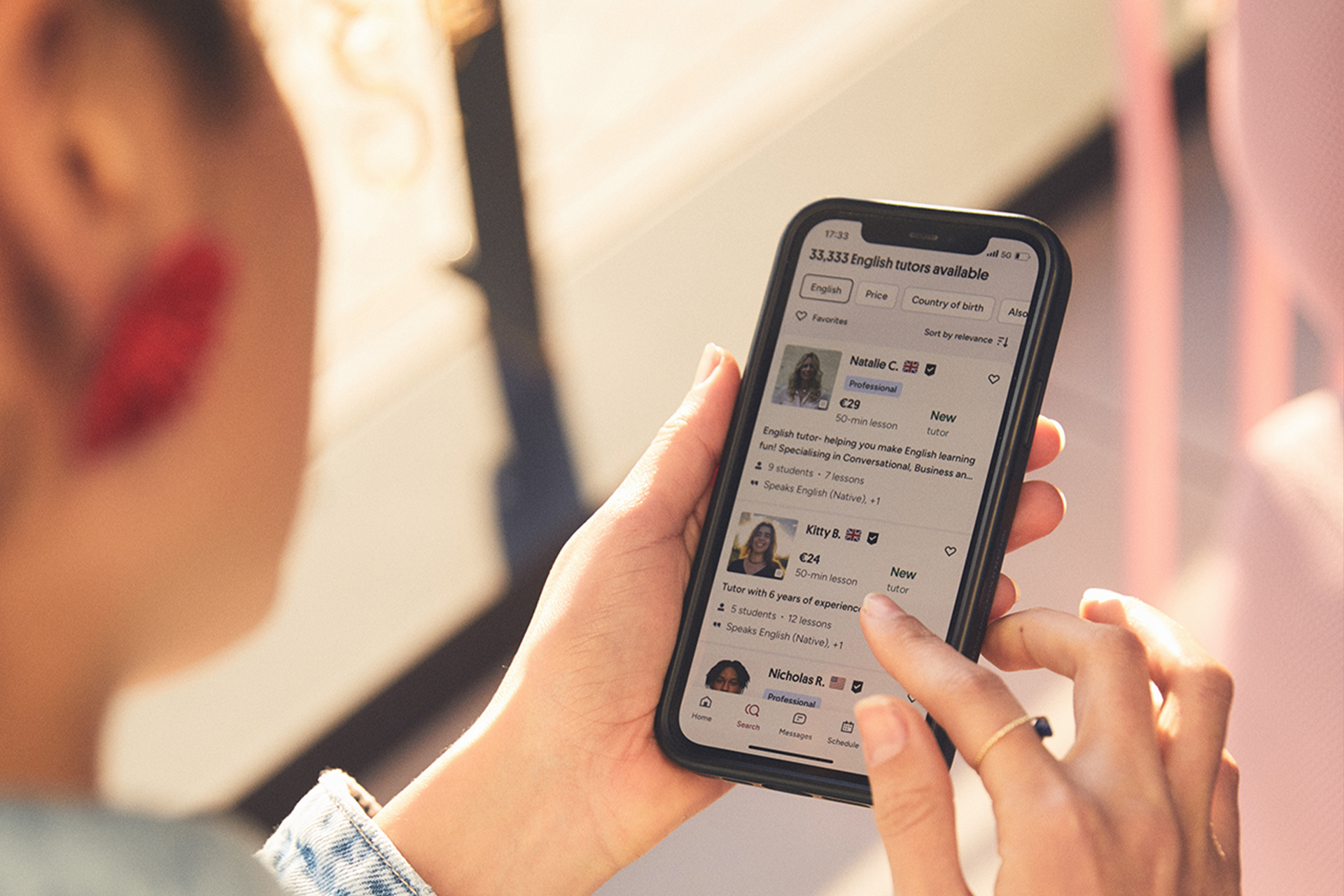
Push notifications remind you of upcoming sessions and nudge you to complete speaking homework. The chat feature lets you text your tutor quick questions — "How do I say 'vegetarian' in Brazilian Portuguese?" — and get a voice note back within hours. That responsiveness can salvage a lesson plan when your itinerary changes.
- Offline access to lesson materials and vocabulary
- Voice recording for pronunciation homework
- Chat with tutor for quick clarifications
- Push reminders for lessons and practice
- Progress dashboard with speaking time stats
- Calendar sync across devices
The app also hosts a library of self-study exercises — gap-fills, listening quizzes, pronunciation drills — tagged by topic. They're not a substitute for live lessons, but they fill gaps between sessions when you have ten minutes on a train.
Progress Tracking and Staying Motivated
Preply's dashboard shows total speaking time, lessons completed, and a skill radar chart covering speaking, listening, vocabulary, grammar, and reading. For travel learners, speaking and listening bars matter most. Tutors update the radar after each lesson based on observed performance, not test scores.
Scroll horizontally to see all columns
| Metric | What It Shows | Why It Matters for Travel |
|---|---|---|
| Speaking time | Minutes of active speech per lesson | Builds fluency under time pressure |
| Vocabulary added | New phrases logged in personal dictionary | Tracks situational phrase acquisition |
| Pronunciation score | Tutor-rated clarity 1-5 | Predicts understandability abroad |
| Lesson consistency | Weeks without gaps | Prevents skill decay before departure |
Some learners find the radar motivating; others ignore it. The more useful signal is whether you can run through a full role-play without freezing. Tutors often record a baseline role-play in lesson one and repeat it near your departure date. The difference is tangible proof of progress.
Cost and Value Considerations
Preply tutors set their own hourly rates, typically ranging from $10 to $40 for English. Travel English specialists often sit in the upper half because they bring niche materials and experience. You buy lesson packages — 5, 10, or 20 hours — which lowers the per-hour cost slightly. There's no subscription; you pay for the package upfront.
- Hourly rates vary by tutor experience and specialization
- Package discounts: 5% off 10 hours, 10% off 20 hours
- Trial lessons cost the tutor's regular hourly rate
- Refunds available for unused hours within policy limits
- No monthly fee; pay only for lessons you schedule
A typical travel prep plan might be 10 hours over four weeks: two 60-minute sessions per week plus 15 minutes of app practice daily. At $25 per hour, that's $250 total. Compared to a group travel English course at a language school — often $300-$500 for less individual speaking time — the value holds if you use the speaking practice consistently.
Watch for tutors who push large packages before you've tested the dynamic. A single trial lesson is enough to gauge chemistry. Also check the cancellation policy — most tutors require 4 hours' notice for a free reschedule, but some are stricter.
Final Assessment of Preply English for Travel
Preply works for travel English when you treat it as a targeted coaching tool, not a magic app. The platform gives you access to tutors who can simulate the exact interactions you'll face, correct your pronunciation in real time, and adapt the plan when your itinerary shifts. The app keeps materials handy offline. The cost is transparent and pay-as-you-go. The main risk is inconsistency — if you skip lessons or don't practice between sessions, progress stalls. For travelers with a clear deadline and the discipline to show up, it's one of the most efficient ways to turn anxiety into functional confidence.
Frequently Asked Questions
How many lessons do I need before a trip?
Most learners see usable improvement after 8-12 hours spread over 3-6 weeks. Even 4-5 focused sessions can cover the highest-priority situations if you practice between lessons.
Can I switch tutors if the first one isn't a good fit?
Yes. Unused lesson credits stay in your account and can be used with any tutor. You can book trials with multiple tutors before committing to a package.
Does Preply provide travel-specific materials or do tutors create their own?
Tutors create or curate their own materials. Many share role-play scripts, audio clips, and vocabulary lists tailored to common travel scenarios. The platform's library also has some travel-tagged exercises.
Is the mobile app required for lessons?
Lessons run in a browser on desktop or mobile. The app is optional but convenient for reviewing vocabulary, recording homework, and chatting with your tutor between sessions.
What if my trip gets canceled — can I get a refund?
Unused lesson credits are refundable according to Preply's refund policy, usually within a certain period after purchase. Check the current terms in your account settings.
Can I learn travel English for a specific dialect, like Australian or Scottish?
Yes. Filter tutors by nationality or accent preference. Many tutors note their accent in their profile and can focus on the variety you'll encounter.