
Language Learning
Preply English Listening Practice: Improve Skills with Tutors
A practical guide to using Preply for listening comprehension improvement.
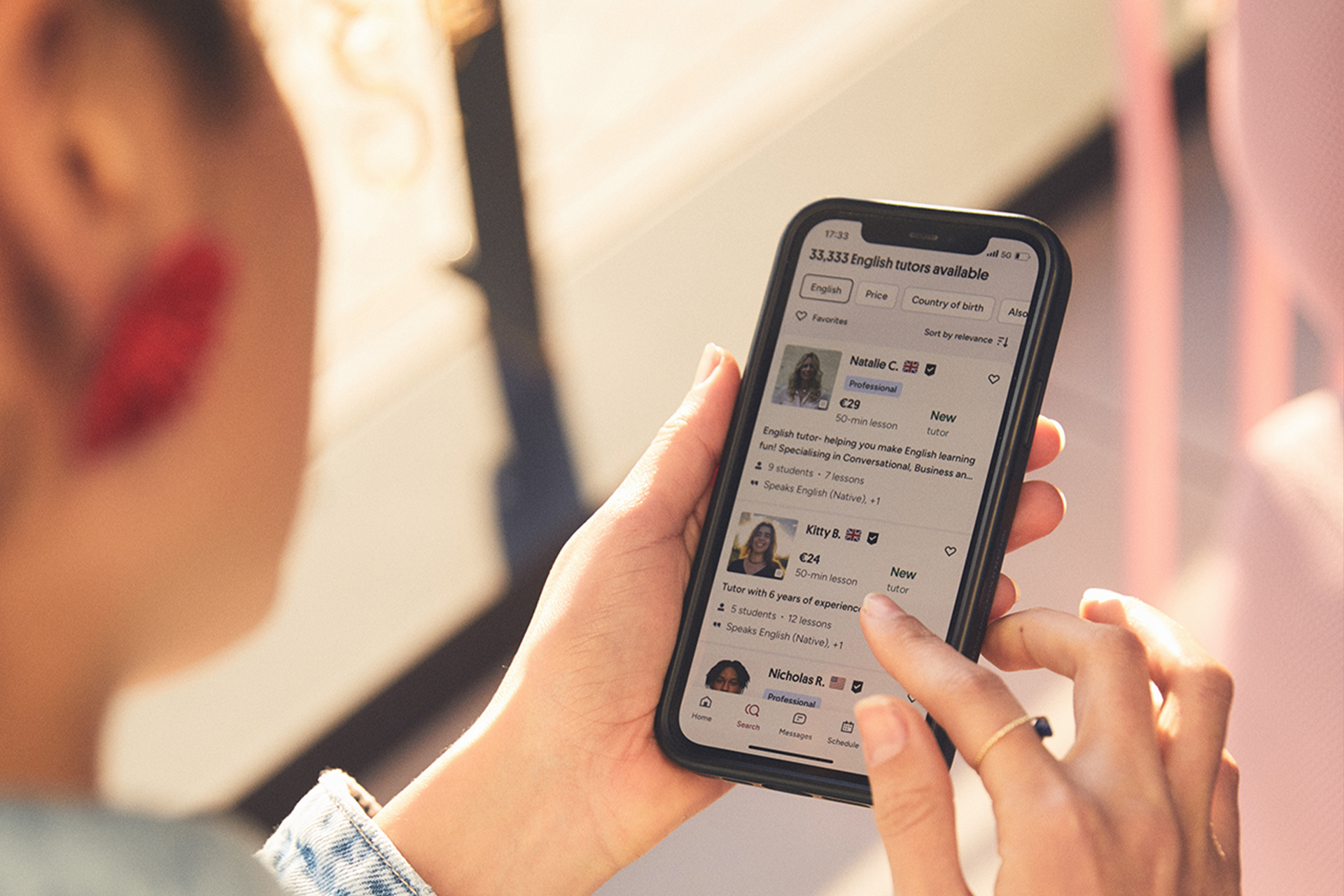
Listening is often the skill that feels most out of reach when you study English on your own. You can memorize vocabulary, drill grammar, and even practice speaking aloud, but understanding real people at natural speed remains stubbornly difficult. Preply addresses this gap by connecting learners with tutors who tailor listening practice to your level, interests, and goals. The platform does not hand you a fixed curriculum; instead, it gives you a marketplace of teachers who design sessions around the audio materials that matter to you — podcasts, news clips, interviews, movie scenes, or business meetings.
Contents
- 1. How Preply Structures Listening Practice
- 2. Finding the Right Tutor for Listening
- 3. Using the Preply App for Daily Practice
- 4. Live Lessons and Real-Time Feedback
- 5. Tracking Progress with Level Tests
- 6. Supplementary Exercises and Resources
- 7. Pricing and Lesson Flexibility
- 8. Common Challenges and Solutions
- 9. Student Experiences and Outcomes
- 10. Final Assessment of Preply English Listening Practice
The core idea is simple: you book a lesson, the tutor selects or creates a listening task, you listen together or beforehand, and then you work through comprehension, vocabulary, and pronunciation. Because the tutor is live, they can pause, rephrase, slow down, or explain cultural references in the moment. That immediate feedback loop is what separates guided practice from passive exposure. You are not just hearing English; you are learning how to process it.
Preply also layers in tools that support practice between lessons. The mobile app includes a vocabulary review system that pulls words from your sessions, a chat feature for quick questions, and a library of self-study exercises. Some tutors assign homework that involves listening to a short clip and answering questions before the next class. The platform tracks your lesson history, so you can see which topics you have covered and where your gaps remain. This combination of human guidance and digital scaffolding makes the practice feel structured without being rigid.
How Preply Structures Listening Practice
Every tutor on Preply builds their own approach, but most follow a loose framework that starts with a needs analysis. In the first session, the tutor asks about your current listening habits, the accents you struggle with, and the contexts where you need to understand English — work, travel, exams, daily life. From there, they select source material. A business English tutor might use TED talks or earnings calls. An IELTS tutor will pull from past exam recordings. A conversation tutor might prefer YouTube vlogs or podcast episodes. The material is rarely a textbook audio CD; it is almost always authentic content.
- Diagnostic listening in the trial lesson to pinpoint weak spots
- Curated authentic audio matched to your level and interests
- Pre-lesson listening tasks so class time focuses on analysis
- Live transcription or note-taking support during playback
- Post-lesson vocabulary lists extracted from the audio
- Optional homework with follow-up comprehension questions
The platform itself does not enforce a single methodology. Some tutors use a flipped model: you listen to a five-minute clip before class, note unknown words, and the session dissects the content. Others prefer live listening where the tutor plays a segment, pauses, and checks understanding in real time. Both work; the choice depends on your schedule and learning style. What matters is that the tutor adjusts the difficulty — slowing playback speed, providing transcripts, or pre-teaching key vocabulary — so the challenge stays in the productive zone.
Finding the Right Tutor for Listening
Preply hosts thousands of English tutors. Filtering for listening expertise requires looking beyond the hourly rate. The profile video is your first clue: does the tutor speak clearly? Do they demonstrate active listening in their intro? Read the reviews for keywords like "listening," "comprehension," "accent," or "pronunciation." Many tutors list specializations such as IELTS listening, business English, or accent reduction. You can also message tutors before booking to ask how they structure listening practice and what materials they typically use.
Scroll horizontally to see all columns
| Criterion | What to Look For |
|---|---|
| Specialization tags | IELTS, TOEFL, Business, Academic, Conversational |
| Review keywords | Listening, comprehension, accent, dictation, shadowing |
| Profile video | Clear speech, natural pace, evidence of teaching style |
| Trial lesson approach | Offers diagnostic listening, asks about goals, shares sample material |
| Availability of self-study resources | Provides audio files, transcripts, vocabulary sets between lessons |
A trial lesson is the only way to know if a tutor's style matches your needs. Use it to test their listening routine: do they have a ready-to-go audio clip? Do they ask you to summarize, answer questions, or repeat phrases? Do they correct pronunciation errors that stem from mishearing? A good listening tutor will not just play audio and ask "Did you understand?" They will break down connected speech, highlight reduced forms, and train your ear to catch word boundaries.
Using the Preply App for Daily Practice
The mobile app extends listening practice beyond the weekly lesson. After each session, tutors can push vocabulary cards that include audio pronunciation. The review algorithm spaces repetitions based on your recall, so words you heard in a podcast clip reappear at optimal intervals. The chat function lets you send a voice message to your tutor asking for clarification on a phrase you heard in a movie — and they can reply with a voice note modeling the correct pronunciation. This asynchronous loop keeps the listening muscle engaged daily without requiring a full lesson.
The app also hosts a growing library of self-study exercises. Some are platform-created: short dialogues with comprehension quizzes, dictation drills, and minimal-pair discrimination tasks. Others are tutor-shared: a teacher might upload a recorded news summary with a gap-fill worksheet. You can filter by level, topic, and duration. The exercises are not a replacement for live feedback, but they fill the gaps between sessions and give you something concrete to do during a commute or lunch break.
Live Lessons and Real-Time Feedback
The heart of Preply listening practice is the live video lesson. The platform's classroom includes screen sharing, a shared whiteboard, and a chat box for links and transcripts. Tutors often share their screen to play audio directly from YouTube, a news site, or a podcast app. They can slow playback to 0.75x without distorting pitch, loop a difficult sentence, or display a transcript line by line. You see the tutor's face, which adds visual cues — mouth movements, gestures — that aid comprehension. The tutor watches your reactions and adjusts instantly: rephrasing a question, offering a synonym, or drawing a quick diagram.
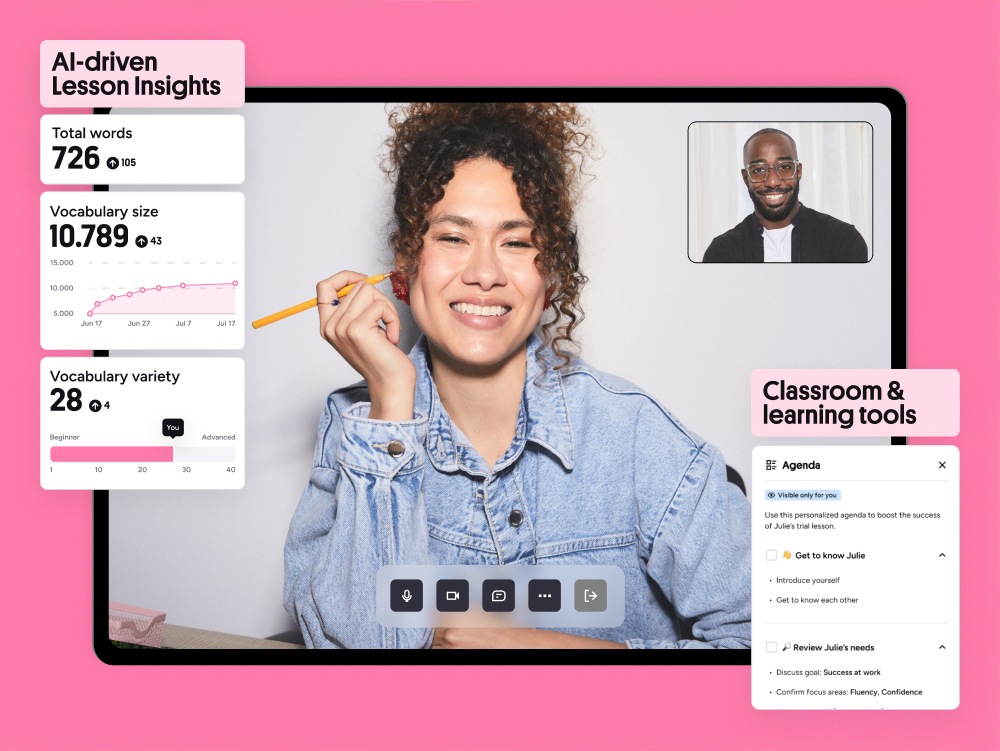
Real-time feedback is where the platform shines. If you mishear "I've been there" as "I been there," the tutor hears the gap and can contrast the contracted form with the full form, drill the rhythm, and give you a mini-exercise on the spot. They can also model shadowing — you repeat a sentence immediately after hearing it, matching intonation and speed. This technique, hard to do alone, builds the muscle memory for processing fast speech. The tutor's ear catches subtle errors you would miss, and their guidance turns a passive listening moment into active skill-building.
Tracking Progress with Level Tests
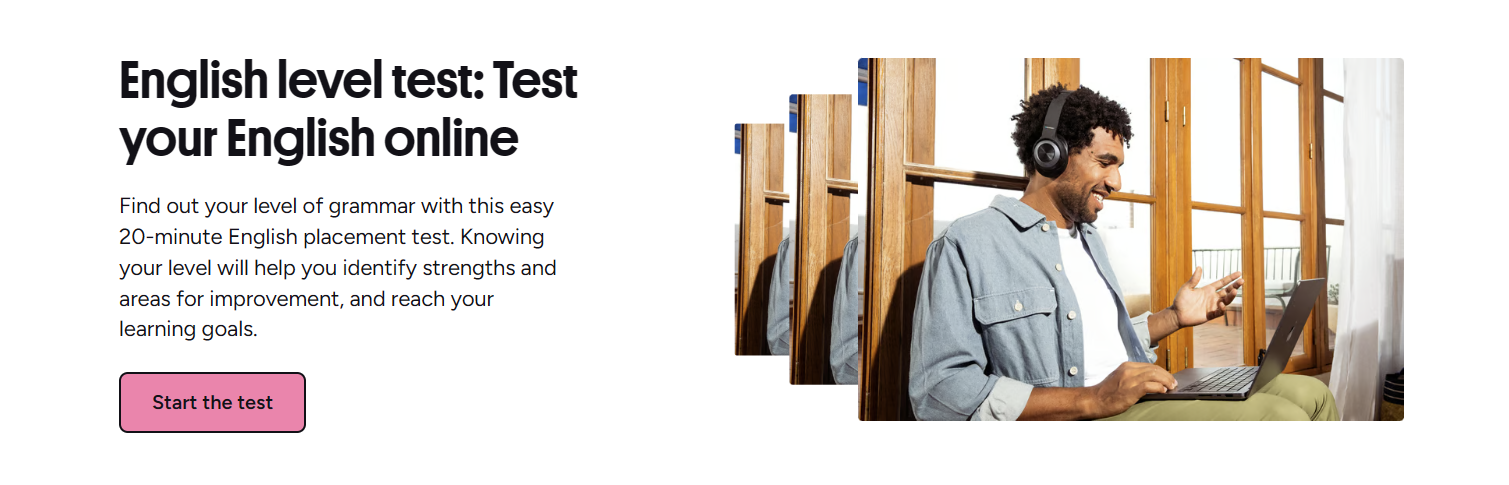
Preply offers an English level test that includes a listening component. The test adapts to your responses and returns a CEFR estimate (A1–C2). While no single test captures full listening ability, the benchmark gives you and your tutor a starting reference. Retaking the test every few months shows whether your comprehension is improving. Some tutors also create their own informal assessments: a quick dictation at the start of each month, or a summary task after a series of podcast lessons. The platform's progress dashboard logs lesson count, hours, and vocabulary learned, but the listening-specific metrics depend on what your tutor chooses to track.
You can also set personal goals in the app — for example, "Understand a 10-minute TED talk without subtitles" or "Follow a team meeting at work." Your tutor can then design a mini-curriculum toward that target. The goal-setting feature is simple but effective: it shifts the conversation from "Let's practice listening" to "Let's work toward this specific outcome." When you achieve a goal, the platform marks it complete, giving a tangible sense of progress that pure hour-counting does not.
Supplementary Exercises and Resources
Beyond tutor-assigned homework, Preply's resource library contains listening-focused exercises created by the platform and by tutors. The quality varies. Platform exercises are professionally produced: clear audio, accurate transcripts, varied accents. Tutor-created materials can be more niche — a Scottish accent guide, a legal English deposition simulation, a medical patient interview — but may lack polish. You can preview most exercises before starting. The library is searchable by level, topic, and exercise type.
- Dictation: type what you hear, auto-graded with error highlighting
- Gap-fill transcripts: listen and complete missing words
- Multiple-choice comprehension: answer questions after a short clip
- Minimal pairs: distinguish similar sounds like ship/sheep, bet/bat
- Shadowing drills: record yourself mimicking a model sentence
- Note-taking templates: structured outlines for lecture-style audio
Many tutors also curate external playlists — YouTube channels, podcast feeds, news sites — and share them via the chat or a Google Doc. They might assign a weekly "listen and log" task: choose one 15-minute episode, note three new phrases, and summarize the main idea in two sentences. This builds the habit of independent listening while keeping the tutor in the loop. The best tutors treat the platform as a hub, not a cage; they point you to the wider world of English audio and teach you how to mine it.
Pricing and Lesson Flexibility
Preply tutors set their own rates, typically ranging from $10 to $40 per hour for English. Specialized listening coaches — IELTS examiners, accent trainers, business communication experts — cluster at the higher end. You buy lessons in packages: 5, 10, or 20 hours. Larger packages lower the per-hour cost. The platform takes a commission that decreases as you buy more hours with the same tutor, incentivizing continuity. There is no monthly subscription; you pay per package and schedule lessons at your pace. Unused hours expire after a set period (usually 12 months), so plan your purchase realistically.
Scroll horizontally to see all columns
| Tutor Profile | Hourly Rate (USD) |
|---|---|
| General conversation tutors | $10–$20 |
| Certified exam prep (IELTS, TOEFL) | $18–$35 |
| Business English specialists | $20–$40 |
| Accent and pronunciation coaches | $25–$45 |
| Native speakers with advanced degrees | $30–$50+ |
Flexibility is a major advantage. You can book a 30-minute session on a Tuesday morning and a 90-minute deep dive on Saturday. The calendar shows each tutor's availability in your time zone. Rescheduling is allowed up to a few hours before the lesson (policy varies by tutor). If a tutor cancels, you get a full credit refund. This pay-as-you-go model suits irregular schedules better than fixed weekly slots at a language school. However, consistency matters for listening progress; the platform sends reminders but cannot force you to show up.
Common Challenges and Solutions
Learners often hit a plateau where they understand their tutor perfectly but struggle with other speakers. This is the "tutor bubble" effect: you adapt to one person's speed, accent, and vocabulary. The fix is deliberate variety. Ask your tutor to rotate guest speakers — colleagues, friends, family members — into lessons occasionally. Use the app's exercise library to hear different voices. Supplement with uncontrolled listening: a podcast you did not choose, a news broadcast without transcripts. The tutor's job is to prepare you for the wild, not to be the only voice you ever understand.
Another challenge is the temptation to rely on transcripts. Preply's classroom makes it easy to display the text while listening. That is useful for analysis, but if you always read along, your ear does not develop the ability to segment speech on its own. A good tutor will enforce "ears first" rounds: listen without text, attempt a summary, then check the transcript. They might also use the whiteboard to hide the transcript and reveal it line by line only after you have processed the audio. Discipline here separates passive reading from active listening.
Student Experiences and Outcomes
Reviews on Preply's site and third-party platforms show a pattern: students who treat lessons as a supplement to daily immersion progress faster than those who treat the lesson as their only practice. A software engineer in Berlin reported that after 20 hours with a business English tutor, she could follow stand-up meetings without asking for repetition. A student in São Paulo preparing for IELTS listening raised her band from 6.0 to 7.5 in three months by combining twice-weekly lessons with daily 20-minute podcast homework. The common thread is consistency and clear goals.
The tutor gives you the map and the compass; you still have to walk the trail every day.
Not every experience is glowing. Some learners complain about tutor turnover — a favorite teacher leaves the platform, and you must rebuild rapport. Others find the audio quality in the classroom occasionally glitchy, though Preply has improved its WebRTC implementation. A few note that the self-study library lacks advanced academic listening material (lectures, seminars) compared to dedicated exam prep sites. These are real friction points, but they are manageable: keep a backup tutor in mind, test your microphone before class, and supplement with university lecture recordings from open courseware.
Frequently Asked Questions
Can I practice listening on Preply without a tutor?
The platform's self-study library includes listening exercises you can do alone, but the core value is live feedback. Without a tutor, you miss real-time correction and personalized material selection.
How do I find a tutor who specializes in IELTS listening?
Use the specialty filter for 'IELTS' and read reviews for mentions of listening practice. Message tutors to ask about their familiarity with the current test format and whether they use official Cambridge materials.
Does Preply provide transcripts for all listening materials?
Tutors often supply transcripts for the clips they use, but not for every authentic source. The platform's own exercises include transcripts. For external podcasts or videos, you may need to find transcripts yourself or ask the tutor to create one.
Can I use Preply on a slow internet connection?
The video classroom adapts bitrate, but streaming audio and video simultaneously requires a stable connection. If your connection is unreliable, ask the tutor to send audio files beforehand and use the lesson for discussion only.
What if I don't like my tutor's listening approach after a few lessons?
You can switch tutors at any time. Unused lesson credits stay in your account and can be used with a new tutor. It's common to try two or three tutors before settling on a long-term match.
Are there group listening classes on Preply?
Preply focuses on one-on-one lessons. Some tutors offer small group sessions by arrangement, but they are not a standard platform feature. For group practice, you might look at Preply's business plans which include team classes.
How long before I notice improvement in my listening?
Most learners report noticeable gains after 10–15 hours of guided practice combined with daily independent listening. Progress depends on your starting level, consistency, and the gap between your tutor's speech and the target accents you need to understand.
Final Assessment of Preply English Listening Practice
Preply works for listening practice because it puts a human in the loop who can curate, scaffold, and react — things an app alone cannot do. The platform's tools (app, classroom, level test, progress tracking) are solid supporting infrastructure, but the quality of your experience hinges on the tutor you choose. Invest time in the trial lesson, be explicit about your listening goals, and hold the tutor accountable for variety and challenge. If you do that, and you show up consistently for both lessons and the unglamorous daily listening homework, your comprehension will improve. It is not magic; it is structured practice with expert feedback, and that is exactly what the skill demands.